
Step one: confirm there is a leak
Do not rely on the bill alone. A bill can rise for many reasons, including more people at home or a new irrigation schedule. The meter test is better because it isolates the house. Find the meter box, usually near the curb, lift the lid and read the dial. Shut off every fixture, the ice maker and the washing machine, wait twenty minutes and read it again.
If the number changed, there is a leak. Next, close the main valve and check the meter once more. If it stops, the leak is inside the house or on the house side of the valve. If it keeps turning, the leak is between the meter and the valve, which is often a buried line in the yard.
Signs of a hidden leak
Warning signs inside and outside the house
- A damp or discolored patch on a ceiling or wall that keeps coming back.
- A warm spot on a floor, which can mean a hot water line under the slab.
- The sound of running water when everything is off.
- Peeling paint, bubbling drywall or a musty smell in a closet.
- A lawn patch that is greener or soggier than the rest.
- Low water pressure that appeared without explanation.
Old galvanized lines and thin early copper pipe are common culprits in houses of the 1930s and 1940s. In Alhambra, tracts such as Mayfair, Bean and Midwick date from that era according to the City's own neighborhood descriptions. If your house is from that period, ask the plumber what the supply pipe is made of.
Where leaks hide and how they are found
| Location | How it shows up | How it is found |
|---|---|---|
| Supply line in a wall | Stain, mold, sound of running water | Acoustic listening and thermal imaging |
| Under a slab | Warm floor, meter running, low hot water pressure | Electronic listening and pressure isolation |
| Under a fixture | Damp cabinet or floor | Visual check, moisture meter |
| Yard service line | Soggy lawn, meter running with the main closed | Pressure test and line tracing |
| Drain line | Odor, stain below a bathroom | Dye test and camera |
| Water heater connections | Rust at fittings, wet floor | Visual check and leak test |
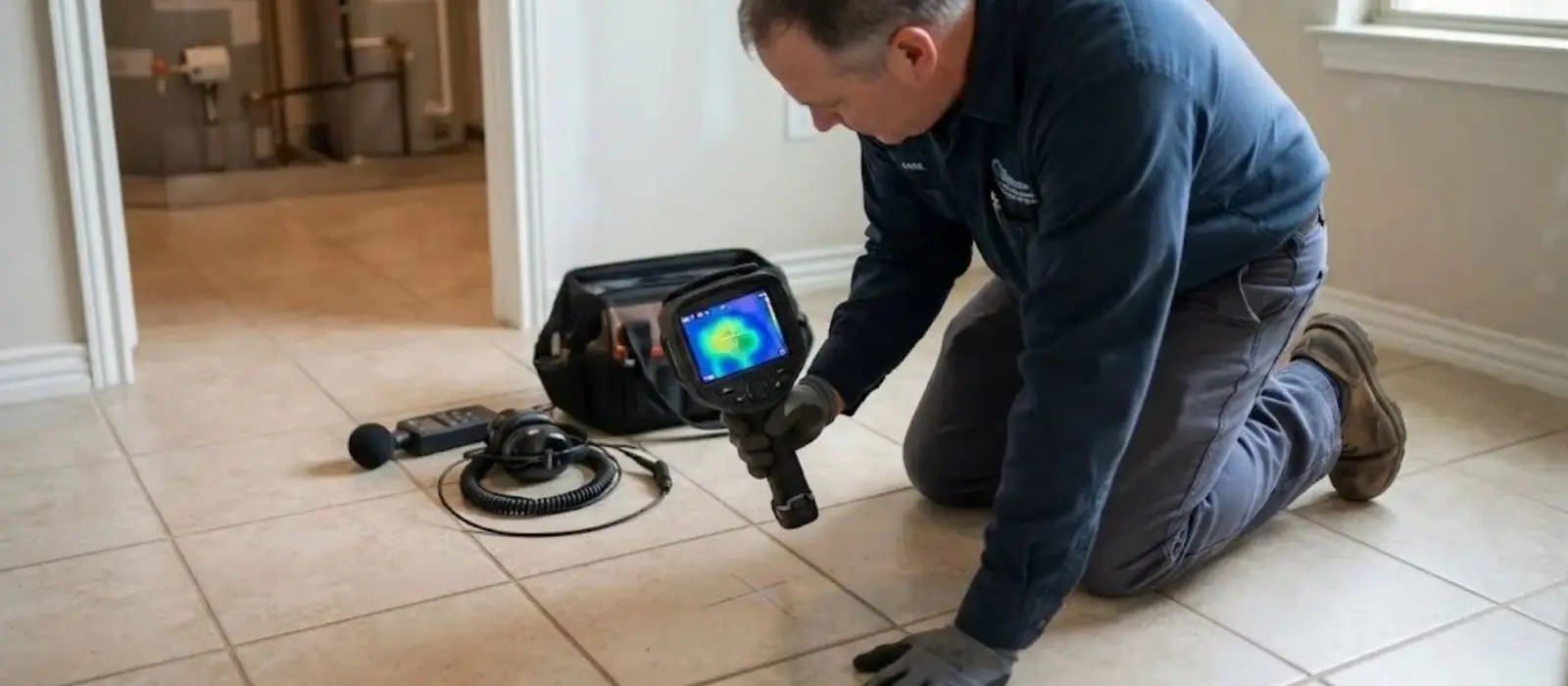
A good leak detection visit narrows the search before a wall is opened. The plumber isolates sections with shutoff valves, listens with sensors and uses a thermal camera. That turns a large hole into a small access panel. Read about leak detection for how the tools work, and see slab leak repair if the water is under the concrete.
Repair options
The fix depends on the pipe and the location. A leaking fitting or valve is replaced. A pinhole in a copper line can be cut out and replaced with a new section. A leak in a long run of old pipe is a warning that the whole line is aging. Three leaks in a few years usually mean repiping will cost less than the next several repairs.
For leaks under a slab, there are three paths. The plumber can open the slab and repair the pipe, reroute the line through the walls or attic, or replace the line. We explain each, with price and disruption, and you choose.
Emergency or not?
Treat it as an emergency if water is running and you cannot stop it, if it is near electrical panels or outlets, if a ceiling is bulging or if sewage is involved. Close the main valve and call. A slow drip under a sink can wait for a daytime appointment, but put a bucket under it and check it twice a day.
Limit the damage while you wait
What to do between the call and the plumber
- Close the main water valve and open the lowest faucet in the house to drain the lines.
- Switch off the water heater at its gas control or breaker so it does not run dry.
- Mop up standing water, lift rugs and move furniture away from wet walls.
- Photograph the damage and the meter reading with a date, before you clean up.
- If a ceiling is bulging with water, poke a small hole at the lowest point with a screwdriver over a bucket to relieve it. Stay clear of light fixtures.
Dry the area quickly. Run fans and open windows for airflow, and use a dehumidifier if you have one. Mold can begin to grow after a day or two of damp, so speed matters more than neatness. Keep any damaged materials until your insurance carrier has seen photos, unless they are a safety hazard.
If you rent, tell the owner or manager in writing as soon as you have shut off the water. A plumber's written findings help show what failed and when, which protects you from a dispute about who pays.
What Alhambra homeowners can check locally
The City of Alhambra's Utilities Department handles water billing and the public water system at (626) 570-5061, and its Environmental Compliance Specialist for water quality is reachable at (626) 570-3259. If the leak is on the street side of the meter, the City is the right call.
The 2024 water quality report says about 70 percent of the supply is local groundwater and 30 percent is imported from the Metropolitan Water District. It lists total hardness of 202 ppm for groundwater and 272 ppm for imported water. Hard water leaves mineral scale in pipes and fixtures, and the report mentions softening as one way to reduce buildup in the hot water system. Scale does not cause leaks by itself, but it can clog valves and age fittings.
Source type: City of Alhambra Utilities Department contacts and the 2024 annual water quality report (municipal utility sources).
What a leak costs and what insurance usually covers
What shapes the price
Leak repair pricing depends on:
- Location
- A visible fitting is a short job. A slab or wall leak takes more time.
- Pipe material
- Copper, PEX and galvanized lines have different repair methods.
- Access
- Finished walls and tile raise restoration costs.
- Detection
- Pinpointing the leak adds a step but limits damage.
- Hour
- Emergency calls cost more than daytime appointments.
You get a clear price before work starts. Homeowners insurance usually responds to sudden water damage but often excludes slow leaks and wear. Ask your carrier before work starts and keep the photos and the plumber's written findings.
If the leak is in Alhambra, a plumber from our dispatch can usually reach nearby towns too. Owners in South Pasadena and Monterey Park ask for the same service, and the process is the same everywhere.
Questions about plumbing leaks
Do a meter test. With all water off, a moving meter means a leak. Other signs include stains, a musty smell, low pressure and the sound of running water.
Even a slow leak adds up over a month. The exact amount depends on the size of the leak and your water pressure, so the meter reading over a day gives a better picture than a guess.
A simple fitting can be tightened, but a leak in a wall or under a slab needs a plumber. A poor repair can hide a bigger problem.
Often it pays for sudden damage and not for slow leaks or wear. Ask your carrier before work begins.
The City of Alhambra Utilities Department at (626) 570-5061 handles the public system. Anything on your side of the meter is yours.
Have a plumbing problem right now? A dispatcher answers around the clock.
☎ Call (626) 898-6169