
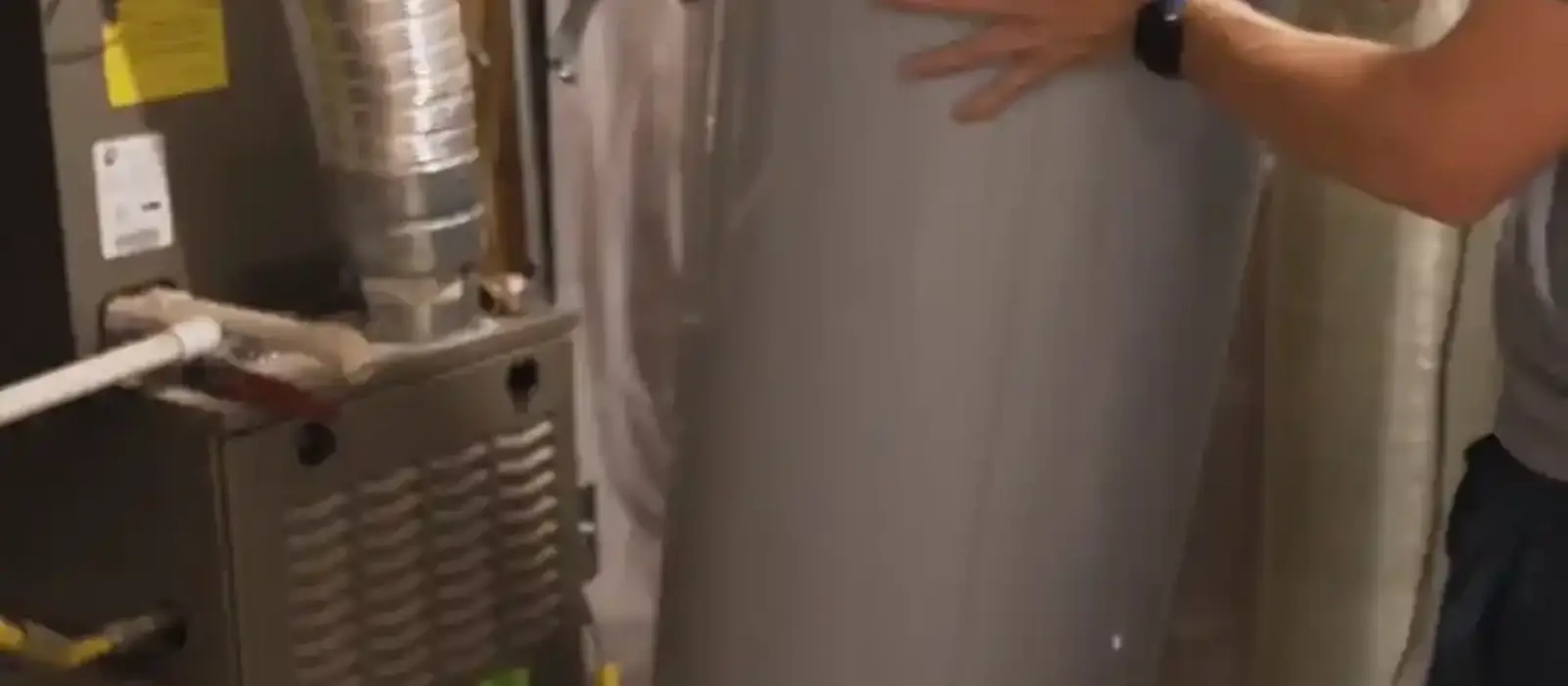
Choosing the size and fuel
Most homes use a 40 or 50 gallon tank. Larger households may want 50 to 75 gallons or a unit with a higher recovery rate. Recovery is how fast the heater reheats once the hot water runs out. A gas heater recovers faster than an electric one of the same size.
The fuel usually stays the same as the old heater, because changing it means new gas lines or electrical circuits. If you are replacing a gas heater and the vent is in poor shape, a plumber can fix the vent at the same time.
| Item | Why it matters |
|---|---|
| New shutoff valve | Lets you isolate the heater later |
| Flexible connectors or new copper | Prevents leaks at the connection |
| Pressure relief valve and discharge pipe | Safety device, must discharge to a safe place |
| Expansion tank where needed | Absorbs thermal expansion in closed systems |
| Earthquake strapping | Required for new and replacement heaters in California |
| Gas shutoff and leak test | Confirms gas fittings are tight |
| Vent connection and draft check | Makes sure exhaust leaves the house |
| Drain pan where required | Catches a leak before it reaches the floor |
Replacement day, step by step
What happens during a tank installation
- The plumber checks the location, the gas or electrical supply and the vent or discharge routes.
- Water and fuel are shut off and the old tank is drained.
- The old unit is disconnected and carried out.
- The new tank is set, leveled and connected to water, gas or power.
- The relief valve, discharge pipe, expansion tank and straps are installed.
- The system is filled, checked for leaks, lit or powered and tested.
Most replacements finish in a few hours. Plan for no hot water in the meantime, and ask the plumber to show you the shutoff, the thermostat and the relief valve before they go.
Safety items to confirm before the plumber leaves
- The tank is strapped at the upper and lower thirds.
- The relief valve discharge pipe slopes down and ends in a safe place.
- There is a gas shutoff within reach and no smell of gas.
- The exhaust draws up the flue when the burner is on.
- The thermostat is set to a safe temperature.
- You have the warranty paperwork and the installation date.
Repair or replace?
A heater under ten years old with a bad part is often worth repairing. A tank that leaks from the body cannot be repaired, and a heater at the end of its life is cheaper to replace than to keep fixing. See water heater repair and water heater replacement for how that decision gets made.
Gas or electric: how the choice plays out
Gas heaters heat water faster and often cost less to run where gas is available, but they need venting and a gas line. Electric heaters are simpler to vent and often fit tighter spaces, but they recover more slowly and need a dedicated heavy circuit. Many homes keep what they have because the infrastructure is already in place.
Heat pump water heaters are a third route. They use electricity to move heat from the surrounding air into the tank, and they need space and airflow around them. They suit some garages and utility rooms and not closets. Ask the plumber whether your space works and what incentives your utility offers.
Signs a tank is nearing the end
- Rust-colored hot water or rusty drips at the fittings.
- Rumbling, popping or banging as sediment cooks at the bottom.
- Water pooling at the base of the tank.
- A tank older than ten years with falling hot water supply.
- A pilot that will not stay lit or a burner that sounds rough.
Safety checklist: what to do if you smell gas near a water heater
- Do not flip switches, use a lighter or start a car in the garage.
- Leave the building with everyone and pets.
- Call the gas utility or 911 from outside.
- Stay out until the utility says it is safe.
- Have a plumber inspect the gas line and connections before relighting the heater.
California strapping law and Alhambra rules
California Health and Safety Code section 19211 requires water heaters to be braced, anchored or strapped to resist falling or horizontal displacement during an earthquake. A licensed plumber installs the straps with the heater.
The City of Alhambra adopted the Los Angeles County plumbing code in Chapter 20.11 of its municipal code, which is based on the 2022 California Plumbing Code. Ask the City at (626) 570-5007 whether your job needs a permit. The City's 2024 water quality report lists groundwater hardness of 202 ppm, so flush the tank each year.
Source type: California Health and Safety Code section 19211, Alhambra Municipal Code Chapter 20.11 and the City of Alhambra's 2024 water quality report.
Keeping the new heater healthy
Drain a few gallons from the bottom valve once a year to carry sediment out. Test the relief valve by lifting the lever briefly and letting it snap back. Check the anode rod every few years. These small steps lengthen life, and in hard water they matter more.
If you notice rust-colored water, popping noises, water at the base or a drop in hot water volume, call early. A small repair now is easier than a flooded closet later.
What shapes the price
Tank installation pricing depends on:
- Tank size and fuel
- Gas and electric units, and larger tanks, cost differently.
- Existing connections
- Corroded pipes or valves need replacing.
- Venting and code upgrades
- An old flue may need changes.
- Access
- Attic or tight closet installs take longer.
- Permit and disposal
- Some jobs include fees and haul-away.
You get a clear price before work starts. Installation is planned work, so emergency rates do not apply.
We install tank heaters across Alhambra and in Rosemead and San Marino.
Questions about tank water heater installation
Many last 8 to 12 years, depending on use and water quality. Hard water and skipped maintenance shorten life.
Yes. California requires it for new and replacement heaters, and we install it.
Yes, but it needs electrical work and a plan for the old gas line.
Many four-person homes use 50 gallons. A plumber can size it to your use.
Often yes. Ask the City of Alhambra at (626) 570-5007.
Have a plumbing problem right now? A dispatcher answers around the clock.
☎ Call (626) 898-6169